
The plan shows what is ready. The team knows what moves next.
Confirmed work creates demand. People, materials and tools define real capacity. Tark brings them together with priorities, so the planner can promise an achievable date and the team can change the plan as soon as readiness or pace changes.
 Demo data

The situation: the schedule exists, but readiness lives elsewhere
Orders and dates sit in one place, the people schedule in another, and a missing material or tool appears only when work should start. When priorities change, the new sequence reaches the worker by phone or on paper.
-
Work is planned but not ready
A person, material or tool is missing. The calendar looks free while the real job waits.
-
Priority changes in several places
The planner edits a sheet, the supervisor edits the queue and the worker hears the change verbally.
-
Actual pace reaches the plan too late
Completed work and stop reasons are compiled after the day. The next plan still uses the old assumption.
The plan is built from role-level decisions
Each role changes the same plan where the information appears, not in a later summary.
-
Project manager or salesperson
Provides confirmed work, the promised date and agreed scope as planning input.
-
Planner and people coordinator
Compare demand with people, materials, tools and absences.
-
Supervisor and operations lead
Assign work and use progress, stops, pace and OEE to change the next sequence.
Business impact
- Work starts sooner because missing readiness appears before assignment.
- People and equipment spend less time waiting, with less repetitive replanning.
- Quality stays in the plan because speed does not come at the expense of a missing material, tool or check.
From demand to the next shift decision
-
Confirmed work shows demand
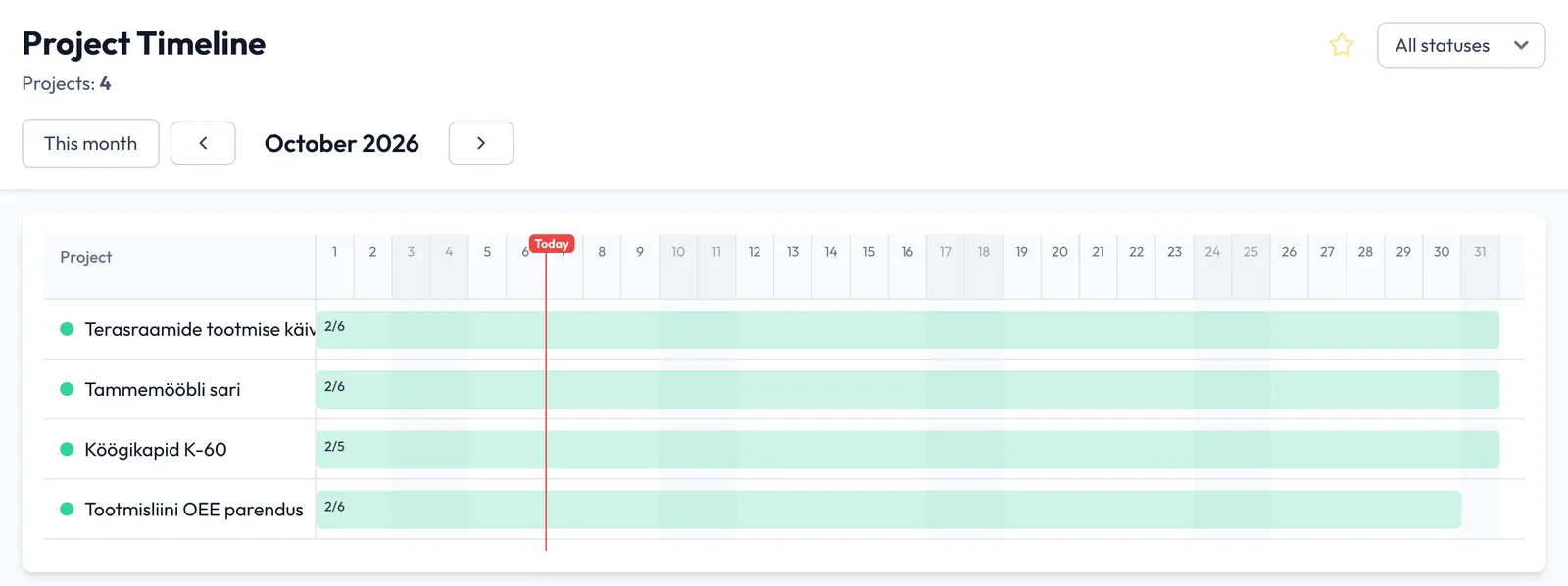
Confirmed work and promised dates give the planner visible demand. The project timeline shows which jobs overlap and where the sequence must change before another promise is made.
- Project manager or salesperson sees
- project dates, stages and durations on a timeline
- Decides
- when work must be complete and where capacity is needed
 Demo data
-
Readiness and priority become one sequence
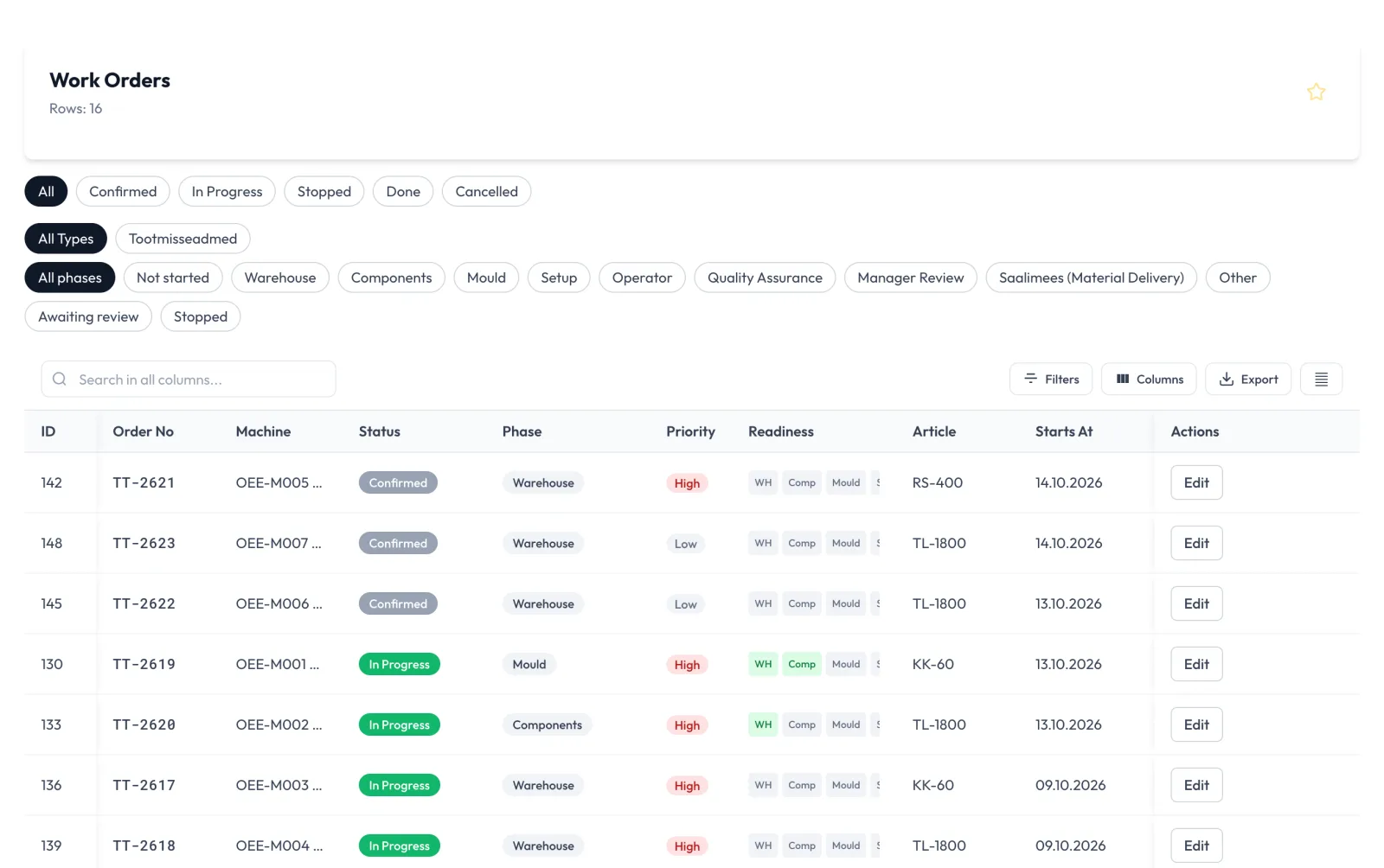
Readiness shows whether the material, components and required tool are available. People availability comes from the schedule beside it. A high priority does not hide a missing input, and the sequence can change for a visible reason.
- Planner sees
- work-order stage, phase, priority, readiness and start date
- Decides
- which job is genuinely ready to start next
-
Actual people availability enters the plan
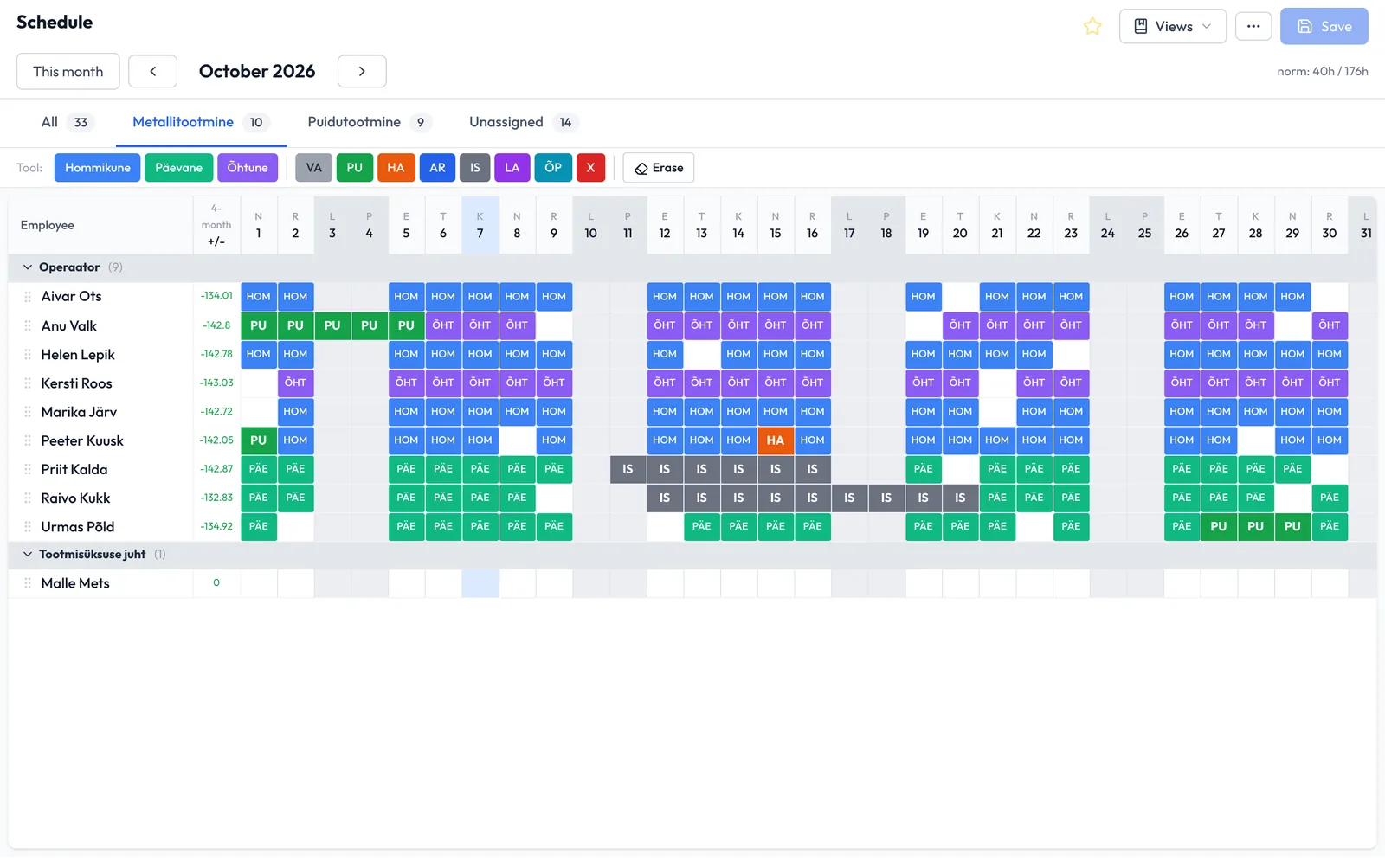
Schedules, time-off requests and leave give planning a view of people availability. The supervisor does not discover at shift start that work was assigned to someone who is away.
- People coordinator and supervisor see
- shifts, workdays and approved time off and leave
- Decide
- whether the work allocation matches the team that will be present
 Demo data
-
Work allocation changes where the situation changes
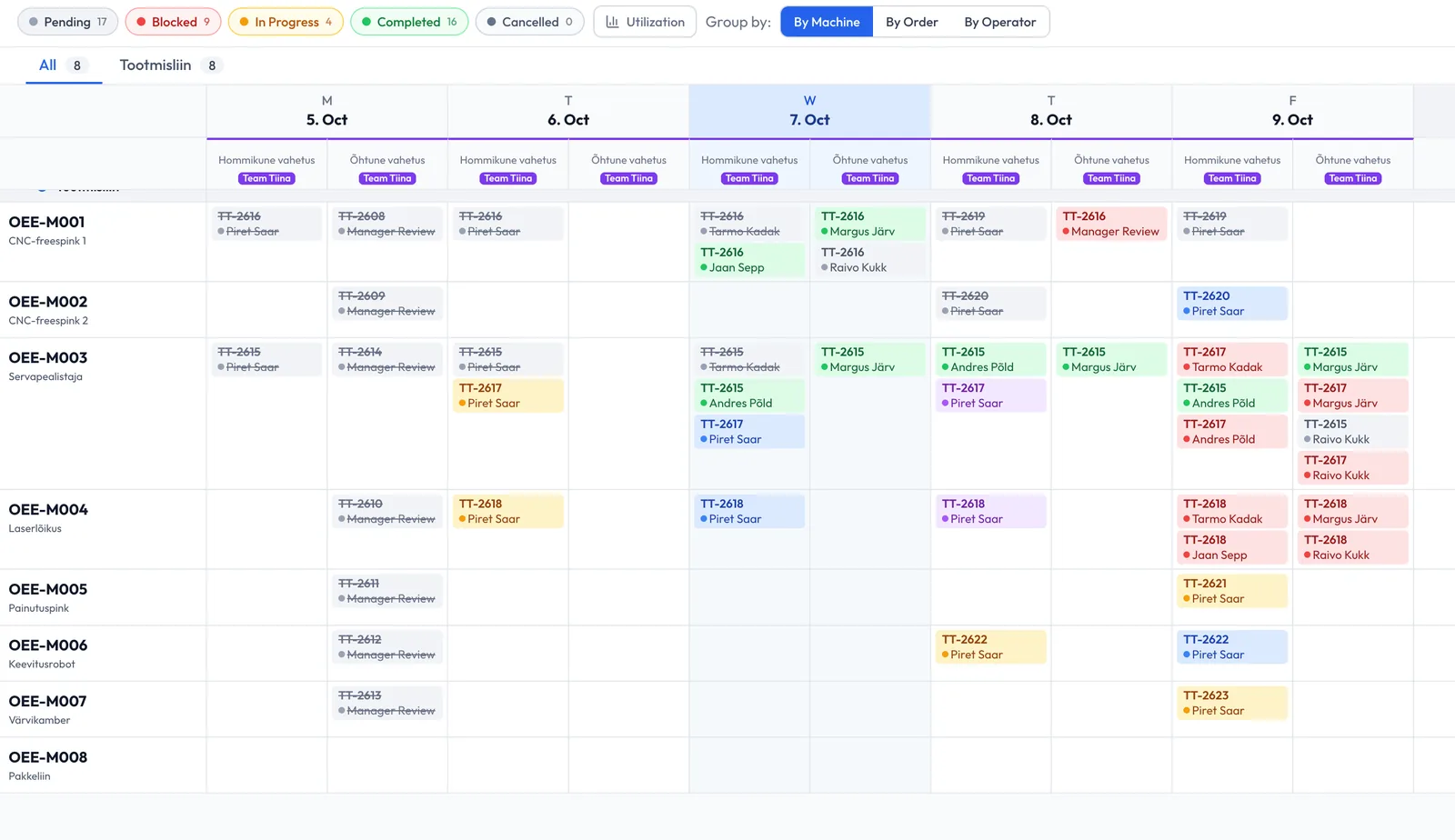
The task board carries the priority to the worker. If work stops, the supervisor changes the sequence in the same view and leaves the reason with the job for planning to see.
- Supervisor sees
- tasks by machine, day, shift, worker and stage
- Decides
- who takes the next ready job and which blocker needs attention
 Demo data
-
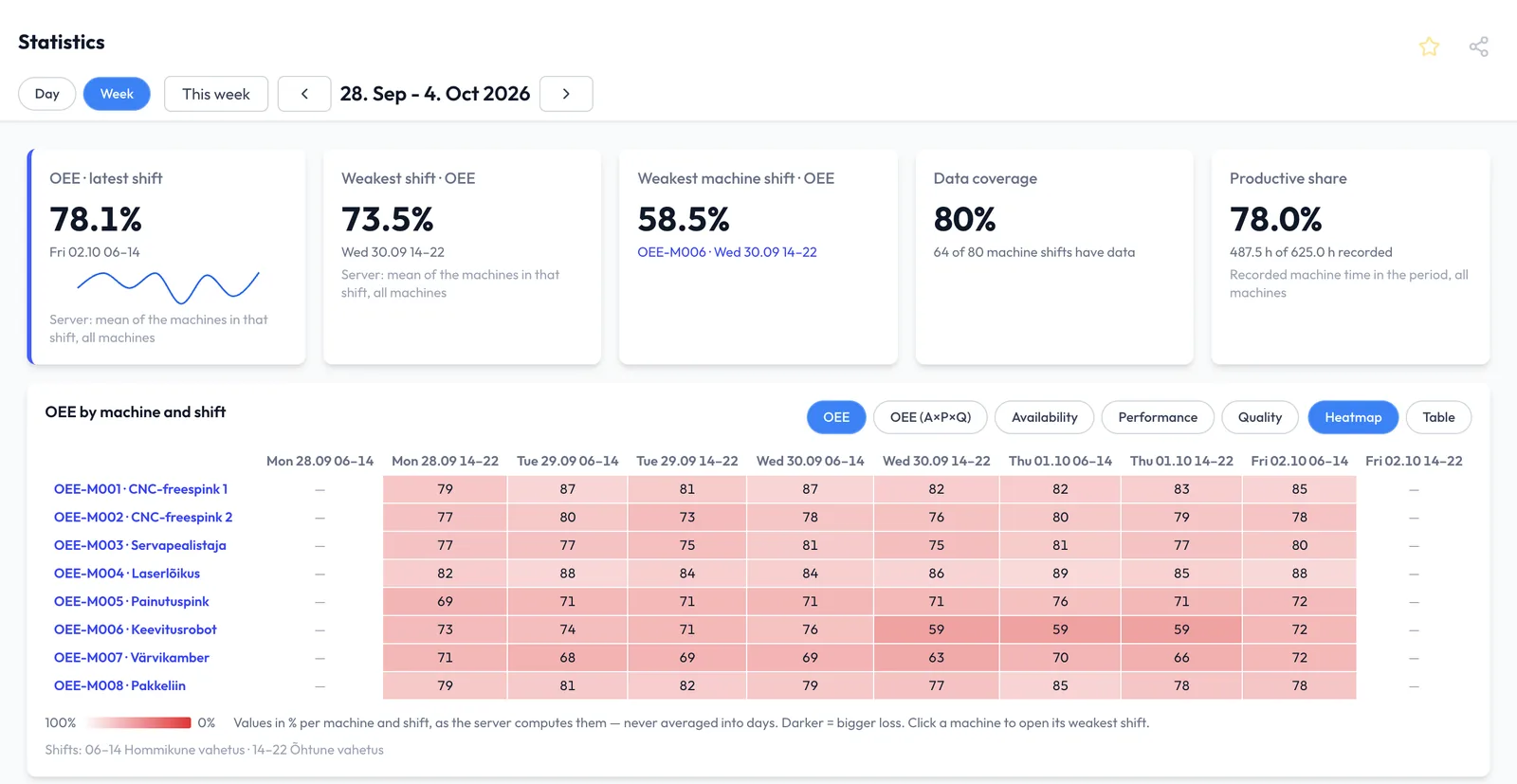
Pace and OEE improve the next plan
Actual progress, stop reasons, pace and quality show whether the planning assumption holds. The operations lead changes the next decision during the work, not only after the period ends.
- Operations lead sees
- equipment OEE by shift and differences as work progresses
- Decides
- whether to change the sequence, remove a blocker or adjust the next plan
 Demo data
An urgent order does not hide missing readiness
A high-priority job needs a material or tool that has not arrived.
The planner sees readiness before assignment. The supervisor can begin the next ready job while the responsible role removes the missing input, instead of letting the whole queue stop silently.
Priority changes the sequence; it does not make reality invisible.
Actual work improves the next plan
-
Measure
Work is planned, but a person, material or tool is not ready.
Lead
Do you change the sequence or remove the blocker before work starts?
-
Measure
Progress, pace or quality differs from the planning assumption.
Lead
What changes in the next allocation or promised date?
Tark brings work readiness, priority and allocation into one view. The planner or supervisor decides whether the sequence changes.
“I especially value Tark Tööstus’s focus on seeing and finding ways to put the company’s resources to better work for growing the business, that is, their work does not include nice-to-have developments but applications that bring real benefit to the company.”



An executable plan keeps the business competitive
When demand, capacity and actual work improve the same plan, the team can give a date it can keep. Less waiting supports a competitive cost, while visible readiness protects quality when priorities change.
Start with one module at one location.
Questions and answers
Does Tark make the plan instead of the person?
Tark brings demand, readiness, priority and actual progress together for the decision. The planner or supervisor still decides the sequence and handles exceptions.
Must people, materials and tools all be introduced at once?
No. Start with the resource whose absence stops work most often, then add the next one when it materially improves the planning decision.
How quickly is it up and running?
One module, one location, one month: at the end of the month you have a measured result and decide whether to continue.
Let’s walk through your plan using one of your jobs.
One module, one location, one month.
Book a 15-minute callMartin Karu
Founder and CEO