The worker sees the right job. Quality sees the same requirement.
The supervisor assigns ready work with its priority and current instruction. The worker records the result with the job, and quality assurance checks it against the agreed requirement. Less time is lost searching, the reason for rework stays visible and the next job begins with better information.
 Demo data

The situation: the task, instruction and result travel separately
Work allocation is on a board or in a sheet, instructions sit in e-mail and folders, and the actual result lives on paper or in the worker’s memory. Inspection happens elsewhere. The problem is not people’s care; it is that information about the same job does not stay together.
-
The job and current instruction are in different places
The worker sees the queue but searches separately for the latest revision, material or check.
-
The actual result reaches the supervisor later
Output, a blocker or a deviation is relayed verbally, so the next allocation uses an old status.
-
Quality feedback stays in its own list
The result is corrected, but its cause does not reach the job, the next instruction or planning.
Each role leaves information with the job
Each role sees what its decision needs and leaves the result with the job for the next role.
-
Supervisor
Selects ready work, assigns a worker and takes priority and current information to the workplace.
-
Worker
Sees the task, materials and instruction, then records the result, a stop or a request for help.
-
Quality lead
Checks the result against the agreed requirement and keeps the deviation, decision and feedback with the job.
Business impact
- Work does not wait while people search for an instruction, status or answer.
- The reason for rework stays with the result, reducing repeated manual work and repeated mistakes.
- Quality is checked against what the customer agreed and the current revision of that requirement.
From task to checked result
-
Ready work reaches the right worker
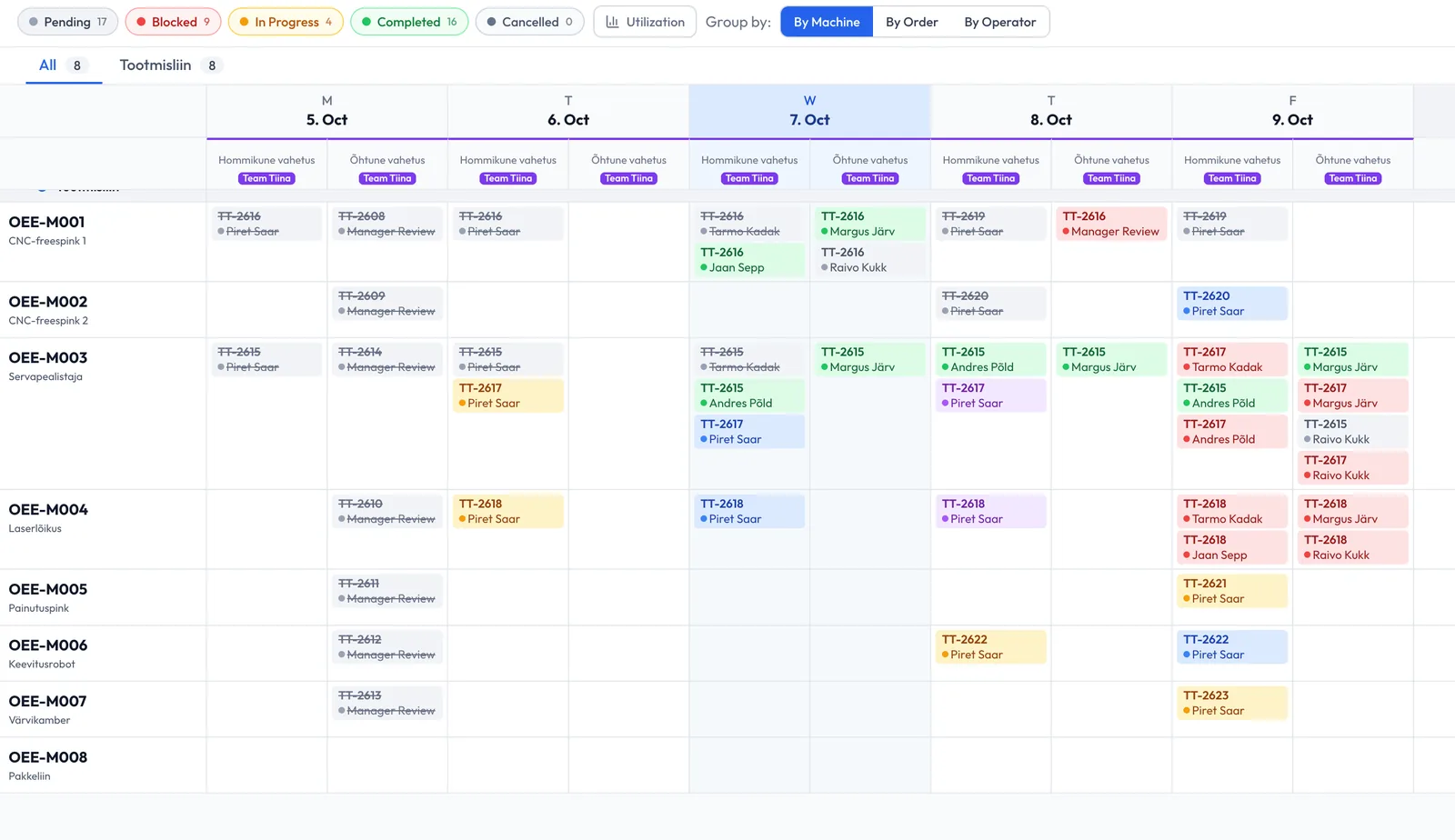
The task board carries priority and ownership to the worker. When the situation changes, the supervisor reallocates work in the same view; the next person does not rebuild the queue from a phone call or sheet of paper.
- Supervisor sees
- tasks by machine, shift, worker and stage
- Decides
- who starts the next ready job and which blocker needs attention
-
Actual work stays with the task
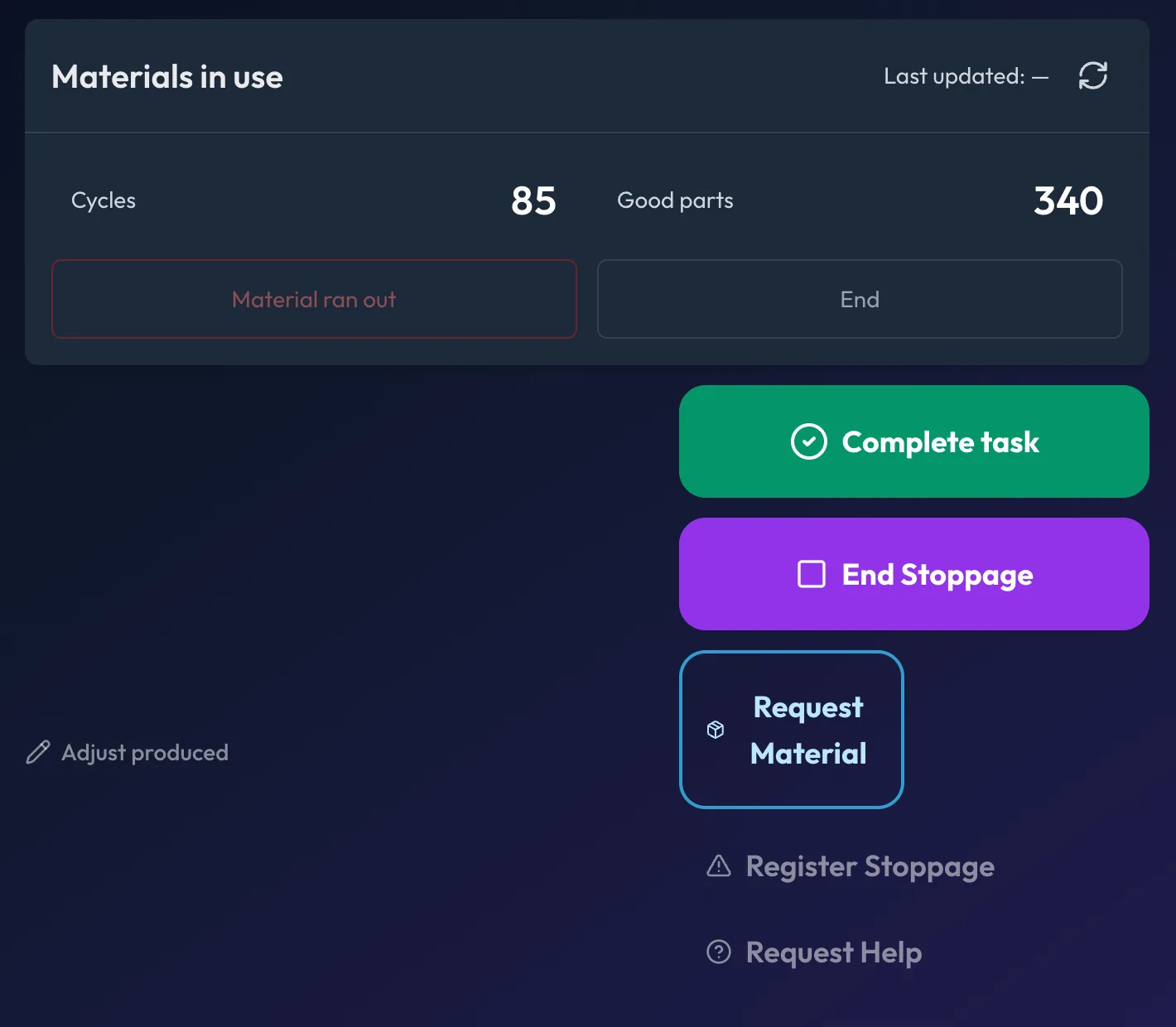
The workstation view gives the worker a next action and a place to record the result. Completed work, a material need or a blocker reaches the supervisor without an end-of-day relay.
- Worker sees
- the active task, materials in use, cycles and good output
- Decides
- whether to finish work, record a stop, order material or ask for help
 Demo data
-
The worker and quality lead see the current drawing
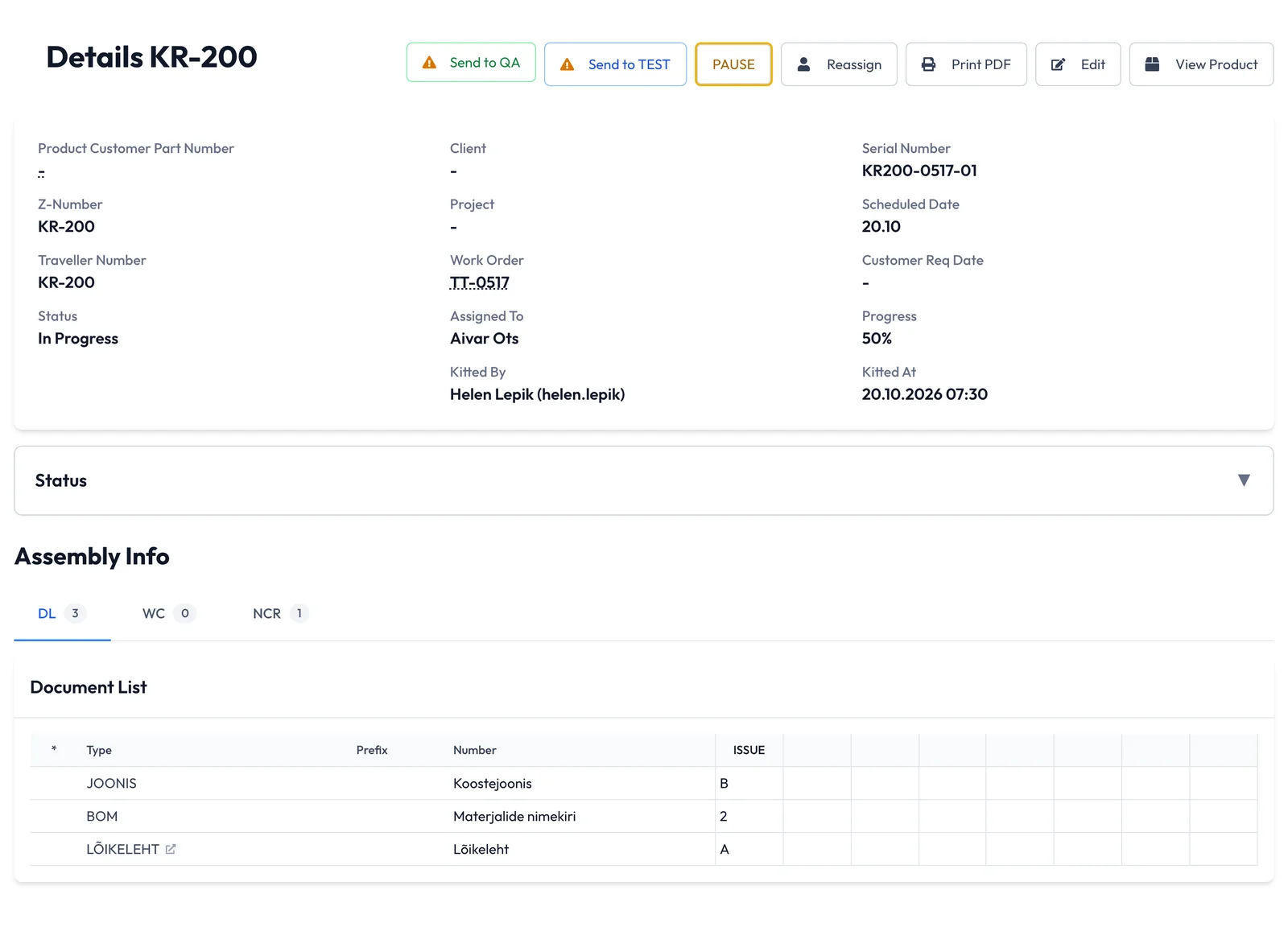
The product and job record keep the basis for inspection visible. Quality does not have to choose between e-mails or folders to decide which revision applies to the finished result.
- Quality lead sees
- the product record, work order, progress, document names and revisions
- Decides
- which requirement applies and whether the job can move on
 Demo data
-
A deviation gets a decision and owner
A deviation is connected to the job and product rather than left as a separate note. The decision reaches the supervisor, and its cause remains visible to the next job and check.
- Quality lead and supervisor see
- the inspection result, deviation, related job and reason for rework
- Decide
- whether to accept the result, send it for correction or stop the work
-
Feedback changes the next job
Results captured during the work show where the process needs to change. The next instruction or check can improve before the same cause appears in another job.
- Operations and quality lead sees
- repeated deviations, rework and the work step where they began
- Decides
- whether to change the instruction, check point, method or next work plan
A change during the work does not create two versions of truth
The customer requirement or work instruction changes after the job has entered the queue.
The current document and revision stay with the job record. The supervisor, worker and quality lead see the same basis and can decide which work the change affects.
A new instruction changes the job, not only what people remember.
The work result improves the next decision
-
Measure
A job does not start, progresses differently or stops for a visible reason.
Lead
Do you reallocate it, remove the blocker or clarify the instruction?
-
Measure
Inspection finds a deviation or the same observation repeats at one step.
Lead
Should the instruction, check point or working method change?
Tark connects the task, current document and inspection feedback to the same product record. A person finds the cause of rework and decides how the instruction changes.
“I especially value Tark Tööstus’s focus on seeing and finding ways to put the company’s resources to better work for growing the business, that is, their work does not include nice-to-have developments but applications that bring real benefit to the company.”



Shared work information keeps the business competitive
When the job, instruction, result and check stay together, waiting and rework cost fall. The team can deliver a quality product or service at a competitive cost and keep the promised delivery date.
Start with one module at one location.
Questions and answers
How does the worker know which instruction is current?
The document and its revision are connected to the job record. The responsible role confirms the current basis, and the worker and quality assurance use the same information with the job.
What happens when inspection finds a deviation?
The deviation stays connected to the job and product. The responsible role decides whether to accept it, send it for correction or stop the work, and the feedback remains visible.
How quickly is it up and running?
One module, one location, one month: at the end of the month you have a measured result and decide whether to continue.
Let’s walk through one of your tasks, from the work to the inspection.
One module, one location, one month.
Book a 15-minute callMartin Karu
Founder and CEO